Master Fashion Design and Brand Creation

Master’s in Fashion Design and Brand Creation
Two years to develop your entrepreneurial skills in the service of fashion
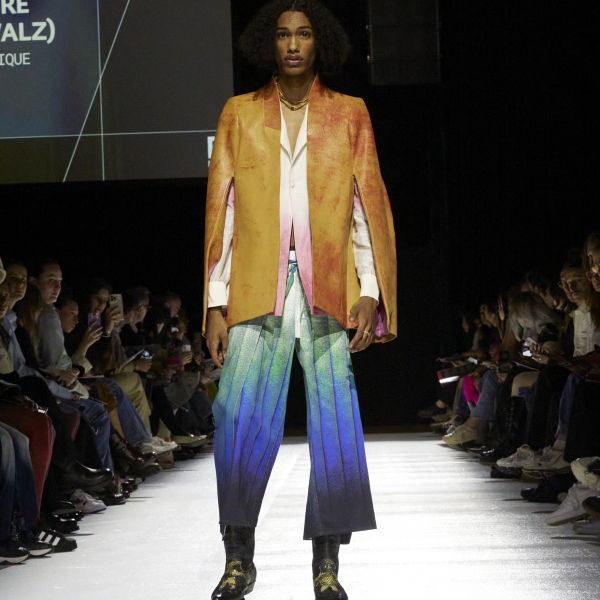
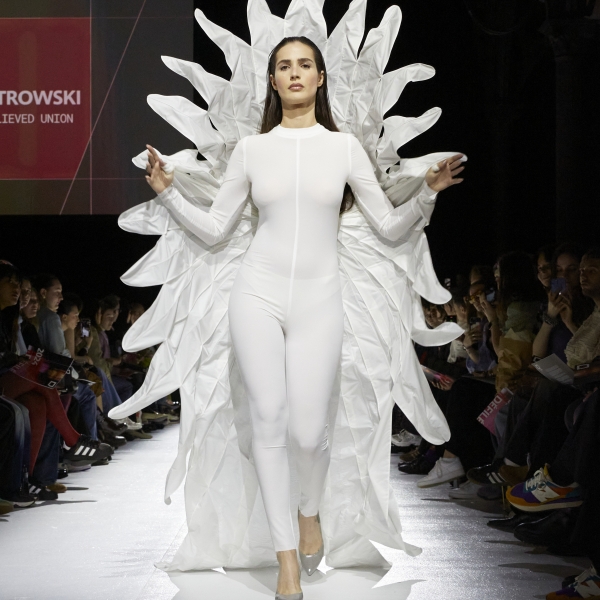
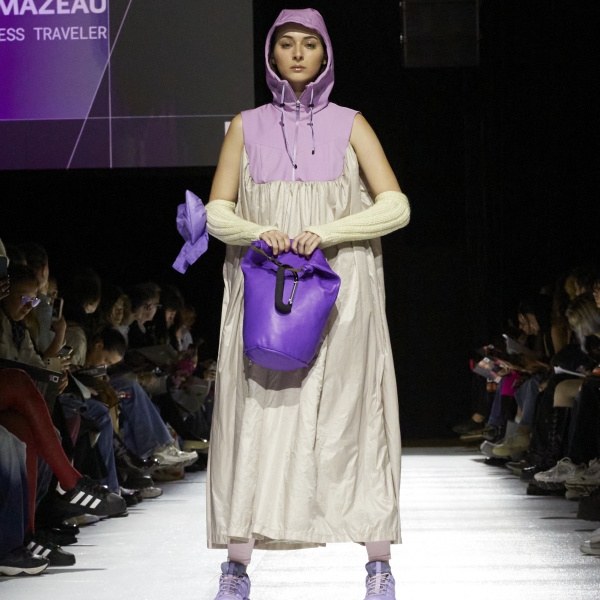
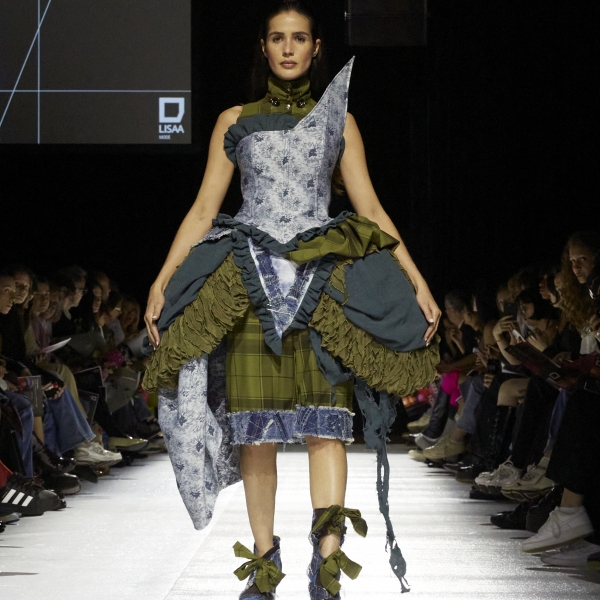
The Master’s in Fashion Design and Brand Creation pushes the boundaries of your creative talent while strengthening your entrepreneurial expertise.
Year 1 focuses on developing your brand project and collection project, combining creative, product, and marketing dimensions. Year 2 is dedicated to building advanced entrepreneurial and strategic skills.
The alliance of business and creativity
The success of any creative project requires both strong business foundations and a dynamic creative vision. Whether you aim to launch your own brand or play a key role in shaping the growth of an established one, this Master’s program provides you with the essential concepts, tools, and professional vocabulary required to succeed.


This two year curriculum enables you to define your creative universe, refine your signature, and engage with the evolving dynamics of the fashion and luxury markets, while professionalising your creative approach.
Upon completion, you are able to:
- Design the overall strategy of a business unit based on a strategic and operational diagnosis
- Plan, optimise, manage budgets, and coordinate the financial aspects of a department or division
- Promote a product or service to internal and external clients in France and internationally
- Support the development of individuals, teams, and organisations within a proximity management approach
- Lead transformation and innovation projects with a customer oriented focus
77,1%
Graduation rate for the RNCP Manager of Business Unit qualification in June 2024
92%
Professional integration rate within 6 months
*This is the most recent rate published by France Compétences.
0,2% Training interruption rate for apprentices during the 2023–2024 academic year
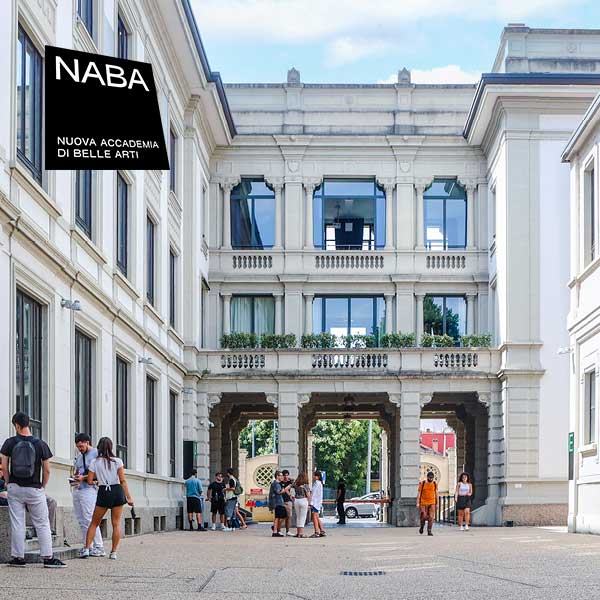
This program offers the opportunity to complete Year 2 in another fashion capital at NABA Milan, recognised as one of the leading art and design schools worldwide.
You develop a rich creative universe while engaging with market evolutions, combining the perspectives of two countries that are leaders in the fashion industry.
Upon completion, you graduate with both a LISAA and a NABA degree, a significant asset for your professional integration.
Program and schedule
The program is structured over two years, four semesters, with the following teaching hours:
- Year 1: 476 hours of courses and 14 hours of examinations
- Year 2: 427 hours of courses and 14 hours of mock jury
These hours include on campus teaching, distance learning, assessment periods, group work, and workshops.
Additional events related to the program, including conferences, speed recruiting sessions, and professional events in the fashion sector, are organised throughout the year and are added to the teaching hours listed above.
Year 1 total: 490 hours
Year 2 total: 441 hours
EC4 – Creativity for (Positive) Impact
- Creative Thinking
- Eco-Design
- 3D Conception
- Project follow-up
- Leather Goods Workshop
- Jewellery Workshop
PR4 – Responsible Production
- Fashion Lab (Fashion Design and Prototyping)
- Visits
- Controlled subcontracting
- Production costs
- Sustainable production models
FB4 – Phygital Fashion Business
- Bootcamp
- Fashion Business – Road book
- Applied Marketing and Digital Marketing
- Visual Merchandising and e-merchandising – Level I
BRAND4 – Branding
- Historical and cultural analysis of fashion communication
- Brand DNA
- Graphic chain
PART4 – Entrepreneurship from A to Z
DDC4 – Corporate citizenship rights and duties
EC5 – Eco-Conception
-
New production rhythms
• Product development
• 3D Design
• Project follow-up
SG5 – Sustainable Branding Strategy
-
Marketing and Communication Strategy
• Sales strategy
• Deployment opportunities in France and abroad
BRAND5 – Branding
-
Professional networking and personal branding
• Public Relations and Brand Visibility
ENT5 – Entrepreneurship
-
Creative team management
• Business plan and legal status
• Analytical accounting
• Fashion Law
• Entrepreneurship – Tips and Tricks
FB5 – Digital Fashion Business
-
E-Commerce strategy (applied)
• Customer journey – Level II
DDC5 – Corporate citizenship rights and duties
- Exams
Study in English – International Track
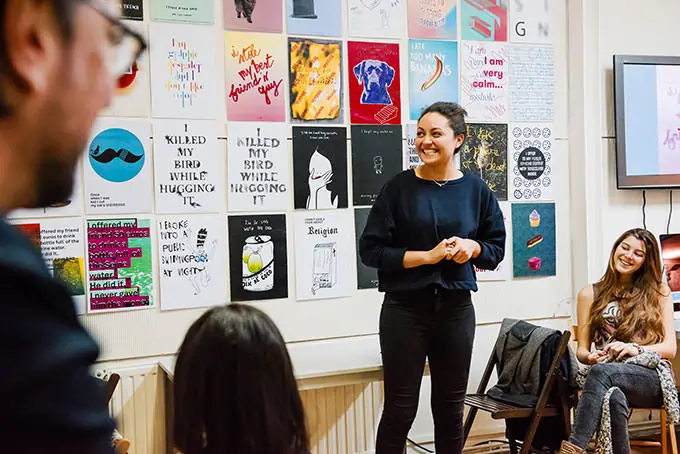
Studying in English is a major asset within the fashion and luxury ecosystem.
- It opens up professional opportunities in new international markets.
- It gives access to a wider range of roles within global fashion groups.
- It encourages geographical mobility and career development within internationally established luxury houses.
- It fosters richer multicultural exchanges, as English remains the common language across the global fashion industry.
Target applicants
Graduates of a Bachelor’s degree in Fashion Design, Fashion Styling, or Business.
Initial program (cumulative pathway)
Applicants must:
Hold a Level 6 qualification, a Bachelor’s degree, or an equivalent qualification including foreign diplomas, or have validated 180 ECTS credits
Have completed a training pathway preparing for the certification within the certifying institution or an approved partner institution
In the work study track (apprenticeship contract or professionalization contract)
Three-year curriculum
Applicants must:
Hold a Level 5 qualification, a two year higher education diploma, or an equivalent qualification including foreign diplomas, or have validated 120 ECTS credits
Have completed a 36 month work study program preparing for the certification within the certifying institution or an approved partner institution
Two-year curriculum
Applicants must:
Hold a Level 6 qualification, a Bachelor’s degree, or an equivalent qualification including foreign diplomas, or have validated 180 ECTS credits
Have completed a 24 month work study program preparing for the certification within the certifying institution or an approved partner institution
One-year curriculum
Applicants must:
Hold a Level 6 qualification corresponding to four years of higher education, or an equivalent qualification including foreign diplomas, or have validated 240 ECTS credits
Have completed a 12 month work study program preparing for the certification within the certifying institution or an approved partner institution
Specific exemptions
Applicants who do not hold the required diploma or professional experience must submit a portfolio demonstrating their ability to validate the professional certification.
This may include prior learning recognition documentation, employer certificates, or any evidence of professional, personal, or associative experience demonstrating the acquisition of relevant competencies.
Admission is based on an administrative file, interviews, and the opinion of the Program Coordinator to verify and validate the alignment between the applicant’s profile and the targeted careers.
The administrative file includes:
- Diplomas and qualifications obtained
- Number of ECTS credits validated
- CV
- Cover letter
Admissions are open from October to September for an October intake. Applications are processed within a maximum of three weeks after receipt of the complete file. Enrollment is possible until the start date, subject to availability.
By exception, enrollment may be possible after the start date, subject to review and verification of the applicant’s ability to catch up on missed coursework, within a maximum of two months after the program begins.
The interview assesses:
- The alignment of the professional project with the program
- The applicant’s interest in the fashion and luxury sector
- The applicant’s organizational ability to follow a program delivered primarily online
Applicants are informed of the admission decision no later than one week after the interview.
Tuition Fees
Full details regarding tuition and associated fees are available on the dedicated Fees page.
Application Timeline
Admissions are open from October to August for a September intake. Applications are processed within a maximum of three weeks after receipt of a complete file. Enrollment remains possible until the start date, subject to availability.
Exceptionally, late enrollment may be authorized after the program has started, provided the candidate demonstrates the ability to catch up on coursework. This is possible within a maximum of two months after the program begins.
See full application procedures.


This program enables you to design, lead, and optimise a Business Unit strategy within the fashion and luxury industry.
You learn to:
1. Design and lead a Business Unit strategy
Conduct a comprehensive strategic diagnosis including market analysis, product positioning, and performance evaluation
Implement strategic and competitive monitoring
Define a coherent development strategy, defend it, and ensure its long term implementation
2. Manage financial performance and optimisation
Assess the financial health of a Business Unit and identify optimisation levers
Develop realistic budget forecasts
Monitor economic performance in collaboration with financial departments
3. Design and deploy a marketing and commercial strategy
Develop a marketing and commercial plan adapted to internal and external targets
Define a clear and compelling value proposition
Lead communication campaigns and measure their impact
4. Manage teams and develop competencies
Implement proximity management and delegation practices
Identify competency needs, recruit talent, and support professional development
Encourage skills development and team cohesion
5. Lead transformation and innovation projects
Design, manage, and evaluate innovation or transformation projects
Identify and manage partners including suppliers and service providers
Support change management and address internal resistance
On campus courses are delivered in full class format within the school premises. The academic schedule is communicated during the September orientation period to enable students to organise their professional commitments effectively.
Distance learning courses are delivered online via the dedicated Blackboard Learn platform. Students are informed of course availability through email communication from faculty members or the academic team, as well as during on campus sessions. Distance learning modules are integrated into the official timetable.
The academic schedule is structured in a non linear format to reflect professional business environments.
Students may work with multiple lecturers within the same Teaching Unit throughout the year, allowing exposure to diverse professional perspectives.
Learning objectives and assessment criteria, whether certification oriented or pedagogical, are communicated at the launch of each project.
The program combines several pedagogical approaches designed to ensure the acquisition of all competencies required for the qualification:
Lectures providing theoretical foundations
Flipped classroom methodology encouraging preparatory work prior to in class application
E-learning modules and tutorials available through Blackboard Learn
Blended learning combining online resources with on campus teaching
Workshops involving intensive thematic exploration over a defined period
Project based learning developed across multiple subjects or in collaboration with partner institutions
Practical case studies based on real business challenges provided by partner companies
Professional integration support delivered by a dedicated team, including conferences focused on sector specific topics
Teachers and assessors support students throughout project development and evaluation processes. Technical support for Blackboard Learn is provided by the Digital Learning Manager within the institution.
Students benefit from access to the following facilities:
Photo studio and computer workstations
FabLabs including textile enhancement workshop with laser cutting, digital embroidery, plotter printers, presses, and sublimation printing, as well as accessories, knitwear, and screen printing workshops
Pattern making studios equipped with sewing machines, overlockers, and cover stitch machines, accessible throughout the year
Three technical instructors specialising in garment construction, knitwear, and textile enhancement, available by appointment
Student progression is evaluated continuously throughout the program.
Continuous assessment plays a central role in measuring development. Evaluations aligned with professional standards structure the curriculum. Projects may be completed individually or in groups.
Second year assessments fall within the certification framework and follow the criteria defined in the official qualification reference. These assessments are completed individually.
Semester 1
- Continuous assessment across all Teaching Units
Semester 2
- Continuous assessment across all Teaching Units
- Pedagogical jury at the end of the academic year
Semester 3
- Continuous assessment across all Teaching Units
Semester 4
- Continuous assessment across all Teaching Units
- One week of certification assessments at the end of the academic year
To validate the RNCP certification, students must:
Validate all competency blocks in full
- The certification jury establishes the list of successful and unsuccessful candidates based on official assessment reports. The jury may rely on evaluation elements from the candidate’s academic pathway within the certifying institution.
- If the full RNCP qualification is not obtained, validated competency blocks remain acquired.
If you have already obtained an RNCP qualification at a similar level and in a comparable specialisation and are interested in this qualification, you may request full or partial advanced standing.
Requests must be submitted via the contact page.
No official pathways are available within the framework of this certification.
This program is designed to support direct professional integration into managerial, creative, or strategic roles within the fashion industry.
Graduates may quickly progress to positions such as Product Manager, Art Director, Marketing Manager, or Brand Creator, depending on their profile and career objectives.