Bachelor Fashion Business Overview
3 years to become a fashion marketing expert
This Bachelor program prepares you over three years to master the key challenges of the fashion and luxury industries. You will gain in-depth knowledge of fashion marketing and communication, as well as the strategies brands use to launch products, enter new markets, structure collections, and strengthen their positioning.
A program focused on the future of fashion
You will engage with the major transformations shaping the industry today. More than ever, fashion must balance creativity, sustainability, digital transformation, and profitability.
These areas of expertise can be further developed in Year 3, during which a work-study format is available.
Who is this Bachelor Fashion Business designed for?
You aspire to become a future expert in influence marketing, a key player in fashion communication, or the talent who identifies tomorrow’s hot brands.
You have a strong creative or digital mindset and feel genuinely committed to contributing to a more responsible fashion industry.
This program is designed for you, the passionate fashion enthusiast ready to shape the future of the industry.
A specialization designed to train expert fashion communicators
This specialization enables you to master the art of communicating fashion in all its dimensions. You will learn how to deliver the right message, in the right place, at the right time, using the most relevant and personalized communication strategies.
Highly sought-after skills across the fashion industry
Serving a product, a collection, a designer, or a fashion brand, you will explore and master the specific dynamics of the fashion ecosystem. You will be able to address all types of stakeholders, from industry professionals such as brands, retailers, and distributors to the end customer.
Courses – Communication & Fashion Image specialization:
- Fashion Networking: Communication agencies and Image departments
- Writing and Describing Fashion
- Fashion in Images, Advertising and AI
- Media and Digital Media Landscape
- Celebrity Envisioning and PR Styling
- Luxury Marketing
An in-depth immersion into the luxury sector
This specialization enables you to develop advanced expertise in luxury by strengthening your knowledge in marketing, business strategy, and communication. You will learn how to develop and distribute desirable and sustainable products while ensuring strong visibility and long-term profitability.
A direct response to market challenges
You will learn how to build 360-degree marketing strategies, in collaboration with established fashion houses, brands undergoing repositioning, or companies expanding into new international markets. You will apply your learning through real case studies provided by partner brands.
Courses – Luxury Marketing specialization:
- Fashion Networking: Luxury professions and Art Houses
- New Luxury and Emerging Business Models
- Product Strategies and New Luxury Client Relationships
- Fashion Data Analytics
- AI and E-Commerce
An immersion into digital strategy and influence
This specialization enables you to become an expert in influence strategy by strengthening your skills in digital marketing, social media, and collaborative campaign management. You will learn how to design impactful strategies to elevate brands, increase visibility, and collaborate effectively with influencers and content creators.
A direct response to the challenges of influence marketing
You will be trained to design 360-degree influence strategies aligned with evolving consumer expectations and changes in social platforms. In partnership with fashion brands, creators, and digital agencies, you will apply your knowledge through real case studies. These hands-on projects prepare you to navigate an industry in constant transformation.
Courses – Influence Strategy specialization:
- Fashion Networking: The Influence Ecosystem
- Influence Agencies and Talent Agents: Contract Structures
- Creation and Production of High-Performance Content
- Content Business Models and Monetization Processes
- The Art of Storytelling
Program and study format
Over three years, the Bachelor Fashion Business at LISAA Paris enables you to acquire the core foundations of fashion commerce, marketing, and communication, in direct connection with the specific dynamics of the fashion industry.
The Bachelor Fashion Business is structured over three years:
- Year 1: 550 hours
- Year 2: 625 hours
- Year 3: 490 hours
The first year of the Bachelor gives you a comprehensive introduction to the fashion industry: its history, culture, and business dynamics. You will explore the full lifecycle of a fashion product, from creation to commercialization, distribution, promotion, and communication.
You will learn to identify tomorrow’s successful products, contribute to their commercial performance, and support the reputation and influence of fashion brands.
Responsible Fashion Marketing and Communication Strategy
- Fashion & Society (41h – 2 ECTS)
- Fashion Business Histories (44h – 6 ECTS)
- Trendspotting (36h – 4 ECTS)
- Fashion Products Focus (31h – 3 ECTS)
Marketing and Communication Action Plans and Performance Evaluation
- Fashion Marketing essentials (54h – 6 ECTS)
- Digital Marketing 1 (21h – 3 ECTS)
- Fashion Communication essentials (54h – 6 ECTS)
Customer Experience Management
- Merchandising Approaches (21h – 4 ECTS)
Management of Marketing and Communication Stakeholders
- Fashion End-of-Year Project (18h – 4 ECTS)
Professional Development
- Me & my pro path (35h – 2 ECTS)
UE8 – LISAA Mode Paris Experiences
- Fashion and Business Workshop (63h – 2 ECTS)
Professional Integration
- Impact 1 (10h – 1 ECTS)
- Fashion English 1 (49h – 6 ECTS)
- Graphic Approaches 1 (49h – 6 ECTS)
- Semester Exams (24h – 0 ECTS)
Total volume: 550h – 60 ECTS
- eting (50h – 6 ECTS / 18h – 2 ECTS)
- Brand and Communication (50h – 6 ECTS)
- Media watch and PR Strategies (42h – 6 ECTS)
UE3 – Customer Experience Quality
- Fashion consumer experience store & e-commerce (18h – 2 ECTS)
UE4 – Managing Marketing and Communication Stakeholders in Fashion
- Marketing Specialization – Courses and Workshop (Bonus)
- Communication Specialization – Courses and Workshop (Bonus)
- Influence Specialization – Courses and Workshop (Bonus)
- Fashion slasher End of Year project (16h – 4 ECTS)
UE7 – Professional Development
- Me & my pro path (33h – 2 ECTS)
UE8 – LISAA Mode Paris Experiences
- Fashion and Business Workshop (83h – 6 ECTS)
UE9 – Professional Integration
- Impact 2 (10h – 1 ECTS)
- Fashion English 2 (44h – 4 ECTS)
- Graphic Approaches 2 (44h – 4 ECTS)
- Semester Exams (24h – 0 ECTS)
Total volume: 625h – 60 ECTS
490 hours in blended learning / 6-month apprenticeship or internship
This third year marks your first step into assistant-level roles in marketing or communication within the fashion industry. The year combines on-campus classes, scheduled online sessions, and work-based learning in a company. It is an ideal opportunity to refine your professional project and strengthen your employability.
Alongside academic courses and seminars, you will join a professional team through an apprenticeship or professional training contract.
Apprenticeship rhythm: 1 week at school / 3 weeks in the company.
UE1 & UE2 & UE5 – Responsible Fashion Marketing and Communication Strategy and Action Plans
- Fashion Communication Strategies (63h – 8 ECTS)
- Strategic and Operational Marketing (63h – 11 ECTS)
- Consulting Project (35h – 5 ECTS)
- Fashion trade and Distribution (28h – 4 ECTS)
UE3 – Customer Experience Quality
- Marketing and Customer Experience (35h – 12 ECTS)
UE4 – Managing Marketing and Communication Project Stakeholders
- Marketing and Customer Engagement (35h – included within UE3 12 ECTS block)
UE6 – Digital Marketing and Communication with a Responsible Approach
- Digital Marketing and Fashion Innovation (49h – 5 ECTS)
UE7 – Professional Development
- Pro-Working (28h – 4 ECTS)
UE8 – LISAA Mode Paris Experiences
- Fashion Laws (14h – 2 ECTS)
- Fashion Business Models (14h – 3 ECTS)
- Design Approaches (14h – 3 ECTS)
UE9 – Professional Integration
- Back to School and Meet-Up (13h – 0 ECTS)
- Impact 3 (10h – 1 ECTS)
- Fashion Business English (34h – 3 ECTS)
- Semester Exams S1 (18h – 0 ECTS)
- Final Certifying Assessments (35h – 0 ECTS)
- Final Certification Assessment (2h – 0 ECTS)
Total volume: 490h
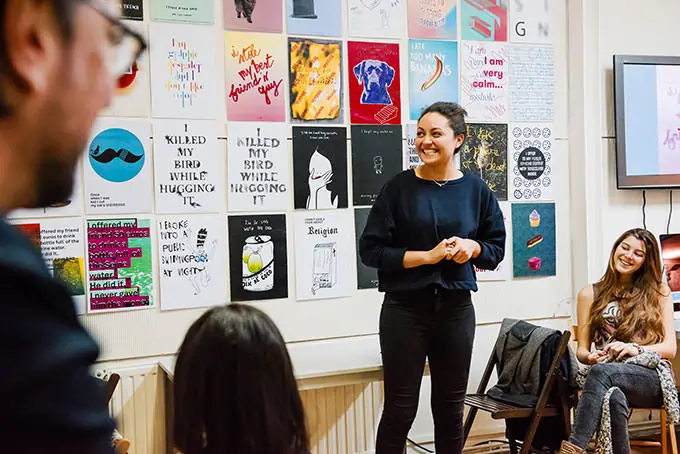
NEW: Enhanced English Support Starting September 2025
Stronger English support from Year 1 of the Bachelor Fashion Business, regardless of the specialization chosen at the end of Year 1.
- A smooth start: an induction workshop to build essential industry-specific vocabulary in English.
- Progressive and complementary learning: access to an interactive platform with 50 hours of annual training, completed at your own pace.
- Accessible learning materials: all course content available in both French and English to ensure optimal understanding.
- Personalized support: monthly English tutoring sessions with dedicated guidance.
- A supportive approach: linguistic flexibility, with the possibility to present oral exams in French in courses delivered in English.
The objective is to help you gain confidence and fluency at your own pace, within a structured and reassuring learning environment.
Upon completion of this program, you will be awarded the following certification registered with the French National Directory of Professional Certifications (RNCP):
Marketing and Communication Manager – ESGCV, Level 6
Registered with the RNCP under number 41107 by decision of the Director General of France Compétences on July 18, 2025.
90%
TCertification completion rate for the Marketing and Communication Manager title (June 2024)
Number of students entered for certification : 30
Number of students who passed : 27
91%
Employment rate 6 months after graduation (2021 cohort)
* Most recent rate published by France Compétences
0,2% Apprenticeship program dropout rate during the 2023–2024 academic year

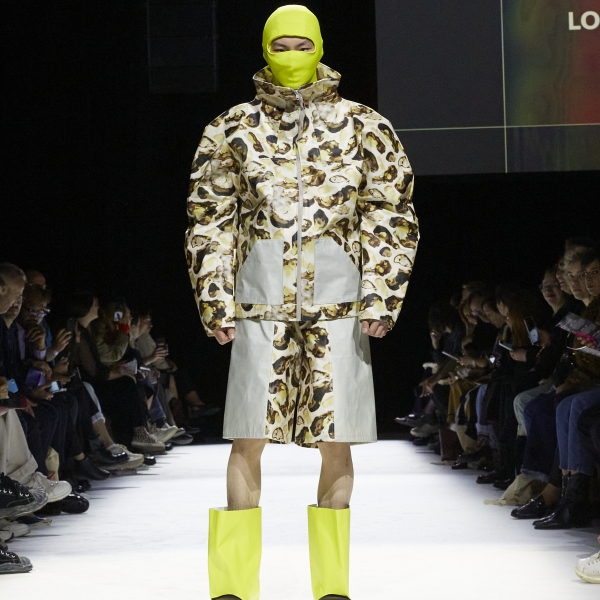
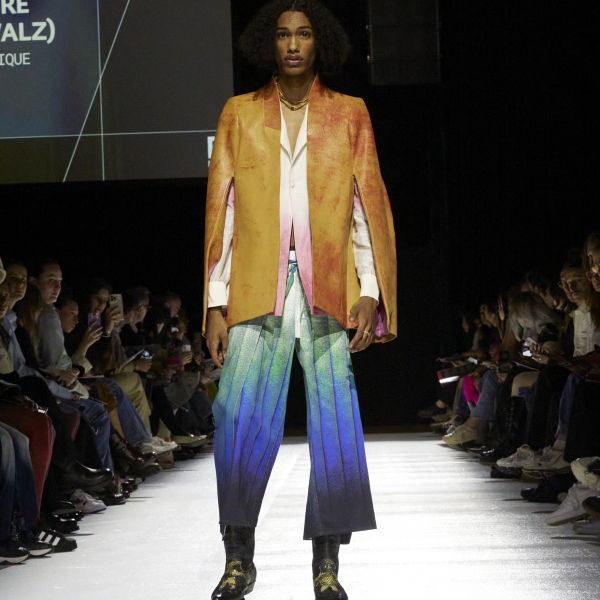
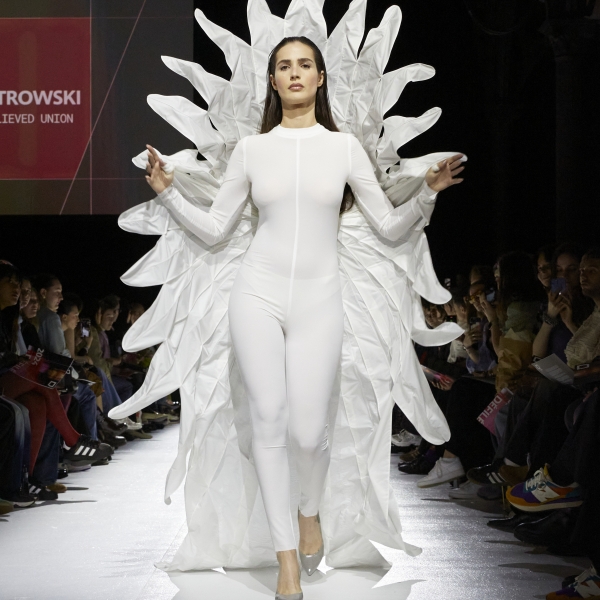
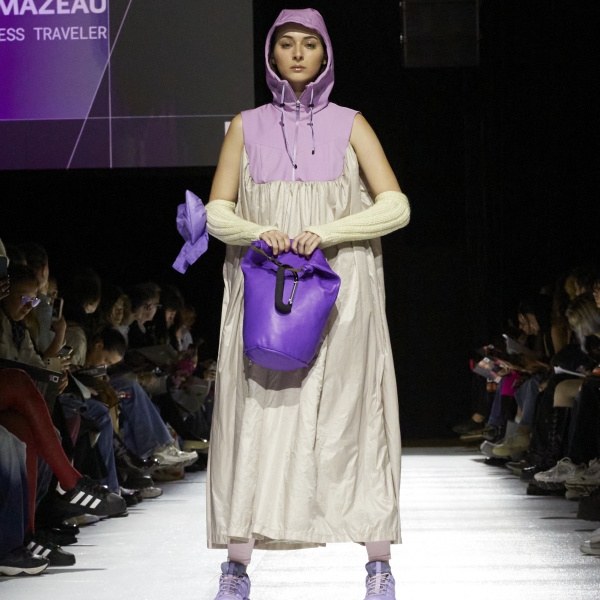
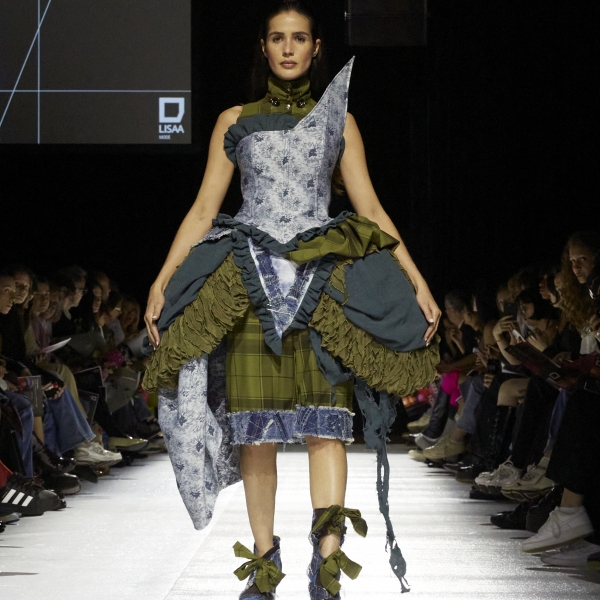
This Bachelor program enables students to develop a strategic understanding of marketing and communication within the fashion industry.
Students learn to:
- Conduct market research and analyze target audiences
- Contribute to the development of new products
- Develop marketing and communication strategies
- Build action plans and manage campaigns
- Optimize the customer journey and customer experience
- Coordinate team projects and present results effectively
Courses combine in-person teaching and digital learning to ensure both academic rigor and professional readiness.
In-person classes are delivered either to the full cohort or according to chosen options. The timetable is shared during the September orientation period so that each student can plan their schedule effectively.
E-learning courses are hosted on the dedicated Blackboard Learn platform. Students are notified by email or during in-person sessions when new content is available. E-learning sessions are also integrated into the official timetable.
Schedules are designed in a non-linear format to reflect real-world professional organization. Students may work with several instructors within the same Teaching Units (UE) throughout the year in order to benefit from diverse perspectives.
Learning objectives and assessment criteria (whether certification-based or pedagogical) are presented at the launch of each project.
The program relies on a variety of teaching methods to ensure the acquisition of all competencies required for certification:
- Lectures for theoretical foundations
- Flipped classroom approach, where students prepare topics in advance and deepen them during in-person sessions
- E-learning modules and tutorials available on Blackboard Learn
- Blended learning, combining in-person and online instruction
- Workshops, offering intensive exploration of specific competencies over a limited period
- Project-based learning, with interdisciplinary projects developed over a semester, sometimes in collaboration with partner schools
- Practical case studies, based on real business challenges provided by partner companies
- Independent research time, allowing students to work individually or in groups on assigned topics
Most courses are delivered in person and structured according to detailed syllabi outlining teaching progression and assessment methods. Evaluation criteria, follow-up procedures, and grading standards are communicated to instructors and assessors.
Teachers support students throughout the completion of assessed work. Technical assistance for Blackboard Learn is provided by the in-house Digital Learning Manager, ensuring access to all course materials.
Instructors are encouraged to upload their teaching materials to the platform for continuous student access.
Pedagogical support is provided by the Program Director and/or the Digital Coordinator.
Students also benefit from the following facilities and services:
- Photo studio and computers available for student use
- Classrooms accessible year-round (independently or by reservation)
- Access to the WGSN trend forecasting platform
- Library and textile resource center
Assessment is conducted throughout the program in accordance with the certification framework.
Evaluation formats include:
- Professional project and/or consulting project
- Professional simulation exercises
- Practical case study with reflective professional analysis
These assignments may be completed individually, in pairs, or in groups, in person or remotely. Successful validation is required to obtain the certification.
Certification Validation
Continuous assessment plays a central role in evaluating student progress. Assessments are designed to reflect professional expectations.
Individual evaluations take place throughout the academic year and are primarily written, depending on the competencies being assessed. Any unjustified absence from an assessment results in a “Not Acquired” grade.
Eligibility for the Certification Jury
To be presented to the Level 6 certification jury for the title “Marketing and Communication Manager,” candidates must:
- Validate the required number of ECTS credits
- Validate all competency blocks
- Complete a six-month internship
RNCP Certification Validation
Certification is granted based on:
- Validation of 60 ECTS credits per academic year
- Decision of the Certification Jury
The Certification Jury establishes the list of successful and unsuccessful candidates based on official evaluation records. The jury may also consider assessment elements from the candidate’s academic pathway within the certifying institution.
If the RNCP certification is not obtained, any fully validated competency block remains acquired.
Admission requirements
Target audience: Post–high school applicants.
Initial program
Year 1
Applicants must hold a Level 4 qualification, a high school diploma (Baccalaureate), a DAEU, or an equivalent qualification (including foreign diplomas).
Year 2
Applicants must hold a Level 4 qualification, a high school diploma (Baccalaureate), a DAEU, or an equivalent qualification (including foreign diplomas), and have completed one year of higher education in business, marketing, or communication.
Year 3
Applicants must hold a Level 5 qualification or an equivalent qualification (including foreign diplomas), or have completed two years of higher education in business, marketing, or communication.
Work-study program (apprenticeship or professional training contract)
Three-year curriculum
Applicants must hold a Level 4 qualification, a high school diploma (Baccalaureate), a DAEU, or an equivalent qualification (including foreign diplomas).
Two-year curriculum
Applicants must hold a Level 4 qualification, a high school diploma (Baccalaureate), a DAEU, or an equivalent qualification (including foreign diplomas), and have completed one year of higher education in business, marketing, or communication.
One-year curriculum
Applicants must hold a Level 5 qualification or an equivalent qualification (including foreign diplomas), or have completed two years of higher education in business, marketing, or communication.
Applicants are expected to demonstrate a strong interest in fashion, motivation, and a willingness to learn.
How to apply
The program can be followed as a student with an internship, or through a work-study pathway under an apprenticeship or professional training contract, accessible to professionals.
Admission is based on an administrative application file, interviews, and the opinion of the Program Coordinator to verify and validate the alignment between the applicant’s profile and the career paths targeted by the program.
The administrative file includes the following supporting documents:
- Diplomas and qualifications obtained
- Number of ECTS credits validated
- CV
- Cover letter
The interview assesses:
- The alignment between the applicant’s professional project and the program
- The applicant’s interest and motivation for the fashion and luxury sectors
- The applicant’s organizational ability to follow a program combining on-campus and remote learning
Applicants are informed of the admission decision no later than one week after the interview.
Admissions are open from October to August for a September intake. Applications are processed within a maximum of three weeks after receipt of the complete file. Enrollment is possible until the start date, subject to availability.
By exception, enrollment may be possible after the program has started, following an assessment of the applicant’s ability to catch up on previously delivered coursework, within a maximum of two months after the start of the program.
See full application procedures.
Tuition Fees
Full details regarding tuition and associated fees are available on the dedicated Fees page.
Application Timeline
Admissions are open from October to August for a September intake. Applications are processed within a maximum of three weeks after receipt of a complete file. Enrollment remains possible until the start date, subject to availability.
Exceptionally, late enrollment may be authorized after the program has started, provided the candidate demonstrates the ability to catch up on coursework. This is possible within a maximum of two months after the program begins.
See full application procedures.


If you have already obtained an RNCP qualification of a similar level and specialization and are interested in our certification, you may apply for full or partial advanced standing. Requests must be submitted via the contact page.
This qualification benefits from a partial correspondence with the RNCP38809 certification Responsible Marketing for Products and Services, particularly regarding the competency block related to managing and coordinating marketing teams.
After completing the Bachelor Fashion Business, you may either enter the professional world directly or continue your studies with one of LISAA’s Master’s programs in fashion: the Master’s in Fashion and Luxury Management (e-learning) or the Master’s in Fashion Communication and Image (on-campus).